Arlington Heights, IL
Bathroom Tile Installation isn’t just about the look—it’s a wet-area system that needs proper prep, waterproofing, and code-aware detailing. Arlington Heights Bathroom Remodel Contractors Pro follows ANSI A108/A118 installation methods and TCNA guidelines to reduce common failures like cracked grout and loose tile. If you’re planning Bathroom Tile Installation in Arlington Heights, we focus on flat substrates, correct thinset coverage, and long-term moisture management.
Arlington Heights Bathroom Remodel Contractors Pro is a licensed bathroom remodel contractor offering bathroom tile installation to homeowners in Arlington Heights, IL. Our in-house team handles every trade — plumbing, electrical, tile, and finish — so your project stays on schedule and on budget. Free in-home design consultation.
Bathroom Tile Installation typically includes surface evaluation, substrate repair, waterproofing in wet zones, precise layout, setting tile, and finishing grout/caulk transitions. We use a laser level and tile leveling system clips to control lippage, and a wet tile saw for clean cuts at niches, corners, and plumbing penetrations. For bonding, we select the correct notched trowel size and apply polymer-modified thinset mortar matched to the tile type (porcelain, ceramic, or natural stone).
A properly executed tile install solves more than cosmetic issues—many failures start below the surface. Hollow-sounding tiles often point to inadequate thinset coverage or a substrate that wasn’t flattened to tolerance; TCNA references flatness expectations of about 1/4 inch in 10 feet for typical tile and tighter requirements for large-format tile. Stained or crumbling grout can signal chronic moisture intrusion, especially when missing movement joints cause cracking at changes of plane. We diagnose the root cause using a straightedge, moisture meter checks when needed, and inspection of existing cement backer board or gypsum exposure.
Our bathroom tile setting service follows a methodical workflow to reduce callbacks: (1) protect adjacent finishes and verify framing/subfloor rigidity, (2) prep the substrate with cement backer board or an uncoupling membrane where appropriate, (3) apply waterproofing in wet zones using a liquid-applied membrane such as RedGard or a sheet system like Schluter-KERDI, (4) dry-lay and snap reference lines with a chalk line to control cuts and symmetry, (5) set tile with the proper mortar and back-buttering technique for coverage, (6) grout after cure time, then (7) seal or finish with 100% silicone caulk at changes of plane. Throughout the process we check alignment with a laser level and verify coverage by periodically lifting a tile.
Materials and standards matter in a bathroom because water finds weak points. We use ANSI A118-rated mortars and grouts suited for wet areas, including epoxy grout (ANSI A118.3) for stain resistance when appropriate, and cementitious grout options for traditional joints. For movement accommodation, we follow TCNA EJ171 concepts—using flexible sealant (100% silicone) at corners and perimeter transitions rather than hard grouting those joints. Where needed, we incorporate crack isolation or uncoupling membranes and compatible cement backer board fasteners to maintain assembly integrity.
We also pay attention to measurable performance details that prevent early failures. Industry guidance targets near-complete mortar contact in wet areas—commonly referenced as 95% coverage for shower/wet applications—to reduce voids that can hold moisture and weaken bond strength. We verify slope at shower-adjacent floors and transitions when tile ties into wet zones, and we finish edges with Schluter profiles for a clean, durable termination. For your Arlington Heights tile installation, the goal is a surface that stays flat, drains correctly where required, and resists cracking through seasonal temperature swings.
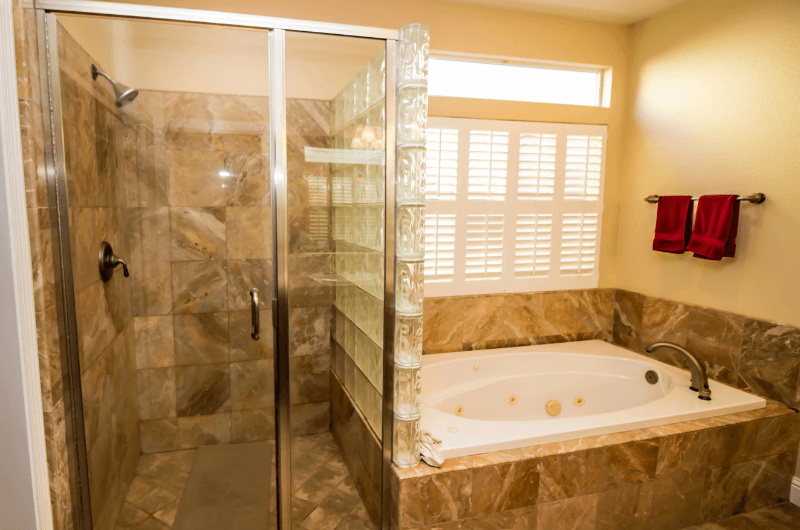
Arlington Heights bathrooms deal with seasonal humidity and temperature swings that can stress tile assemblies—especially in older homes near Arlington Park and throughout the area’s mid-century housing stock. We account for movement and moisture management by following TCNA EJ171 movement-joint principles and selecting ANSI-rated mortars and grouts suitable for wet areas. For projects in neighborhoods like Scarsdale and near the downtown Arlington Heights corridor, we also consider common subfloor types and settling patterns found in local properties, then recommend the right substrate prep, waterproofing, and edge detailing to match Village of Arlington Heights expectations and everyday use.
When you hire Arlington Heights Bathroom Remodel Contractors Pro for bathroom tile installation in Arlington Heights, you get a dedicated project manager, licensed in-house trades, a fixed-price quote upfront, and a lifetime workmanship warranty. We've completed hundreds of bathroom remodels across Arlington Heights and know exactly how to navigate local building codes, permits, and HOA requirements.
Bathroom Tile Installation cost in Arlington Heights typically ranges based on (1) tile material and size (porcelain vs. natural stone, large-format vs. mosaic), (2) square footage and pattern complexity (straight lay vs. herringbone), (3) substrate condition (leveling, cement backer board replacement, or crack isolation), and (4) waterproofing needs (liquid membrane vs. sheet membrane). Labor increases when there are many cuts around plumbing, niches, or tight corners, and when epoxy grout (ANSI A118.3) is specified. The most accurate way to price it is to measure the tile area, confirm flatness, and identify whether the assembly requires waterproofing, underlayment, or floor leveling—then provide a written estimate based on those site conditions.
Most Bathroom Tile Installation projects take about 2–5 days depending on the size of the area and the amount of prep required. A simple bathroom floor can often be completed in 1–2 days, while walls or complex layouts may add time for waterproofing, curing, and detailed cuts. Timeline is affected by substrate repairs, membrane cure times, tile size (large-format often requires more prep for flatness), and grout type (epoxy grout typically involves more labor).
Bathroom Tile Installation by itself usually does not require a permit in Arlington Heights when it’s a like-for-like finish upgrade with no plumbing, electrical, or structural changes. Permits are more commonly required if the project includes moving plumbing lines, altering electrical circuits, adding exhaust ventilation changes, or modifying framing. Requirements can vary, so we recommend confirming with the Village of Arlington Heights Building Department before work begins, especially if the tile scope is tied to other trade work.
You may need Bathroom Tile Installation or replacement if you notice: cracked or tenting tiles (often from movement or missing expansion joints), hollow-sounding tiles when tapped (poor mortar coverage or bond failure), recurring mildew or dark grout lines that don’t clean (moisture intrusion or failing sealant), loose tiles near the tub or shower perimeter (water exposure at transitions), crumbling grout or missing caulk at corners (movement joints grouted instead of sealed), or uneven tile edges/lippage that creates trip hazards. A site inspection can confirm whether the issue is the tile surface, the substrate, or waterproofing underneath.
Schedule your free in-home design consultation today. Our licensed bathroom remodel contractors in Arlington Heights will walk your space, listen to your vision, and give you an honest fixed-price quote — with no pressure and no hidden fees.